An existing cattle line upgrade starts with a measured survey and the plant’s chosen halal or non-halal route. Establish what can remain, which transfers constrain the new equipment and what work the site can carry out before requesting a replacement machine.
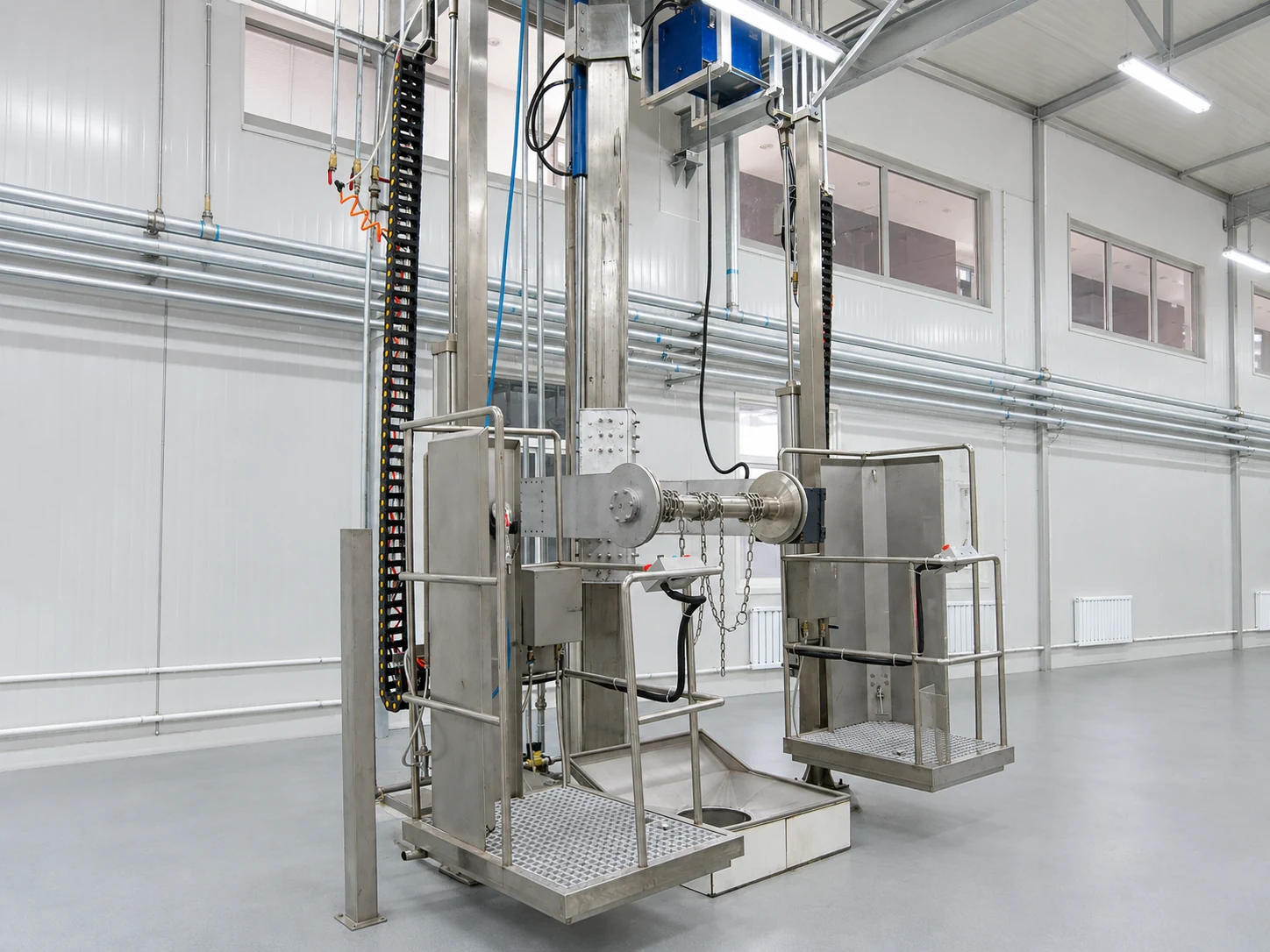
Build an inventory of retained interfaces
- Measure rail elevations, curves, switches, supports and hanging components.
- Record platform positions and travel, floor levels, columns and clear working space.
- List retained drives, controls and available services; identify what is documented and what needs inspection.
- Mark existing carcass, hide, head, offal and rejected-material routes.
- State the current approval/certification scope and the change proposed for review.
Compare repair, replacement and rerouting
A new hide puller may affect pre-skinning access, platform travel and the hide outlet. A rail-changing unit may change the handoff to the dressing conveyor. An inspection conveyor change can affect identification and veterinary access. Compare the surrounding scope of each option rather than judging a replacement by its photograph or machine footprint alone.
Plan the installation boundary and return to operation
Ask the plant team to define the available work window, retained services and temporary protection of other operations. Assign dismantling, supports, new connections and controls work to the responsible contractors. Agree the checks for the complete modified station and any required authority review before the plant returns the section to use.
Concept example: replace the hide-pulling station
A buyer wants to change the hide puller while keeping the dressing rail. The useful first package is a measured section drawing, cattle range, platform survey and photographs of the existing services and hide outlet. Review the new puller together with the upstream preparation and downstream carcass support. This is a planning example without a claimed customer, installation date or production improvement.
Information for the upgrade offer
- Dimensioned survey and current equipment drawings where available
- Selected slaughter route and local review of the proposed change
- Retained/new equipment list and service availability
- Installation access, work-window constraints and contractor responsibilities
- Operating, inspection and acceptance checks to be agreed
Review the hide-puller interface · Prepare the retained-equipment brief · Discuss an upgrade