Choose the halal or non-halal line route before selecting the front-end equipment. This guide follows the cattle handling and dressing interfaces shown in the Zhengye cattle brochure; the accepted slaughter method and its verification belong to the selected route. Similar station types do not imply that halal and non-halal operations may share physical equipment or premises.
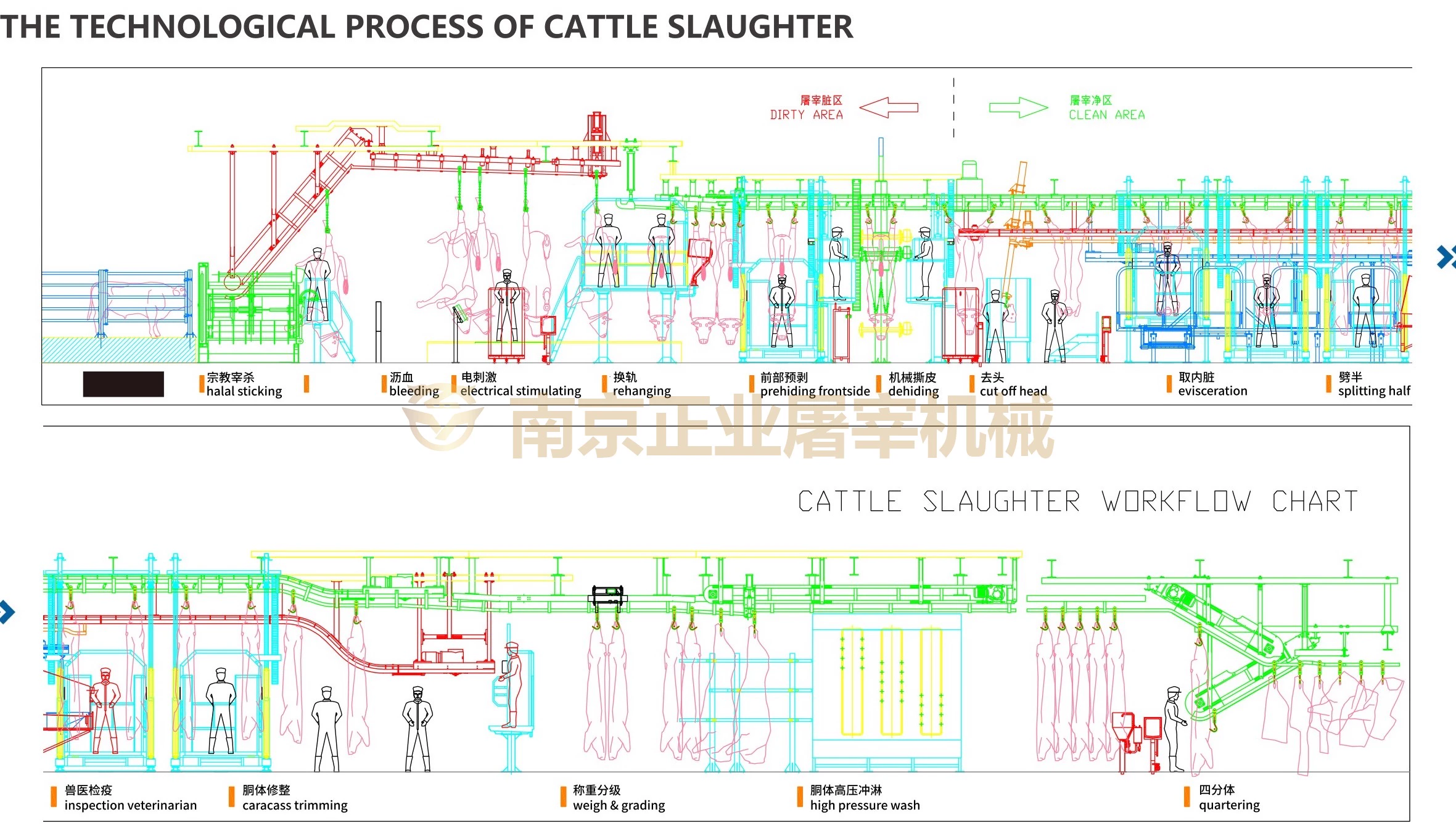
Before station 01: animal reception and local review
Draw the unloading, lairage and ante-mortem inspection route with the local plant and veterinary teams. Record where animals are accepted, held or rejected and how the race meets the restraint area. These are preliminary site decisions rather than an extra photographed machine station.
Receive, restrain and transfer
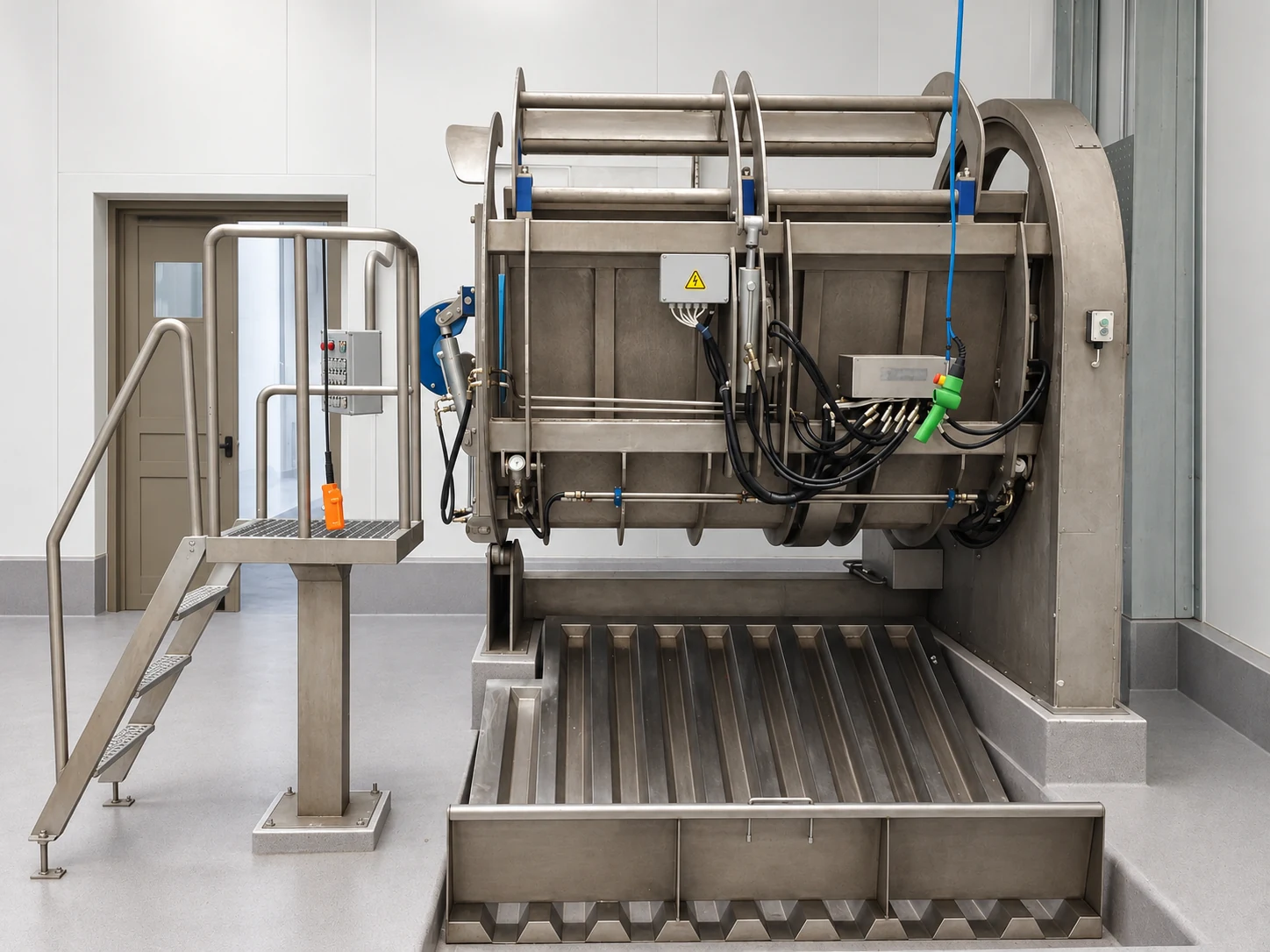
Station 01
Restraint & slaughter configuration
Begin at the handoff from the live-animal race. The box positions the animal for the selected slaughter procedure; it does not determine whether a plant is halal or non-halal.
- Equipment
- Rotary cattle restraint box · Pneumatic restraint box
- Factory planning check
- Identify the cattle size range, entry approach, operator access and the procedure approved for this route. Keep restraint geometry and the method decision on the same brief.
Incoming: Animal reception and the selected front-end route
Outgoing: Cattle hoisting
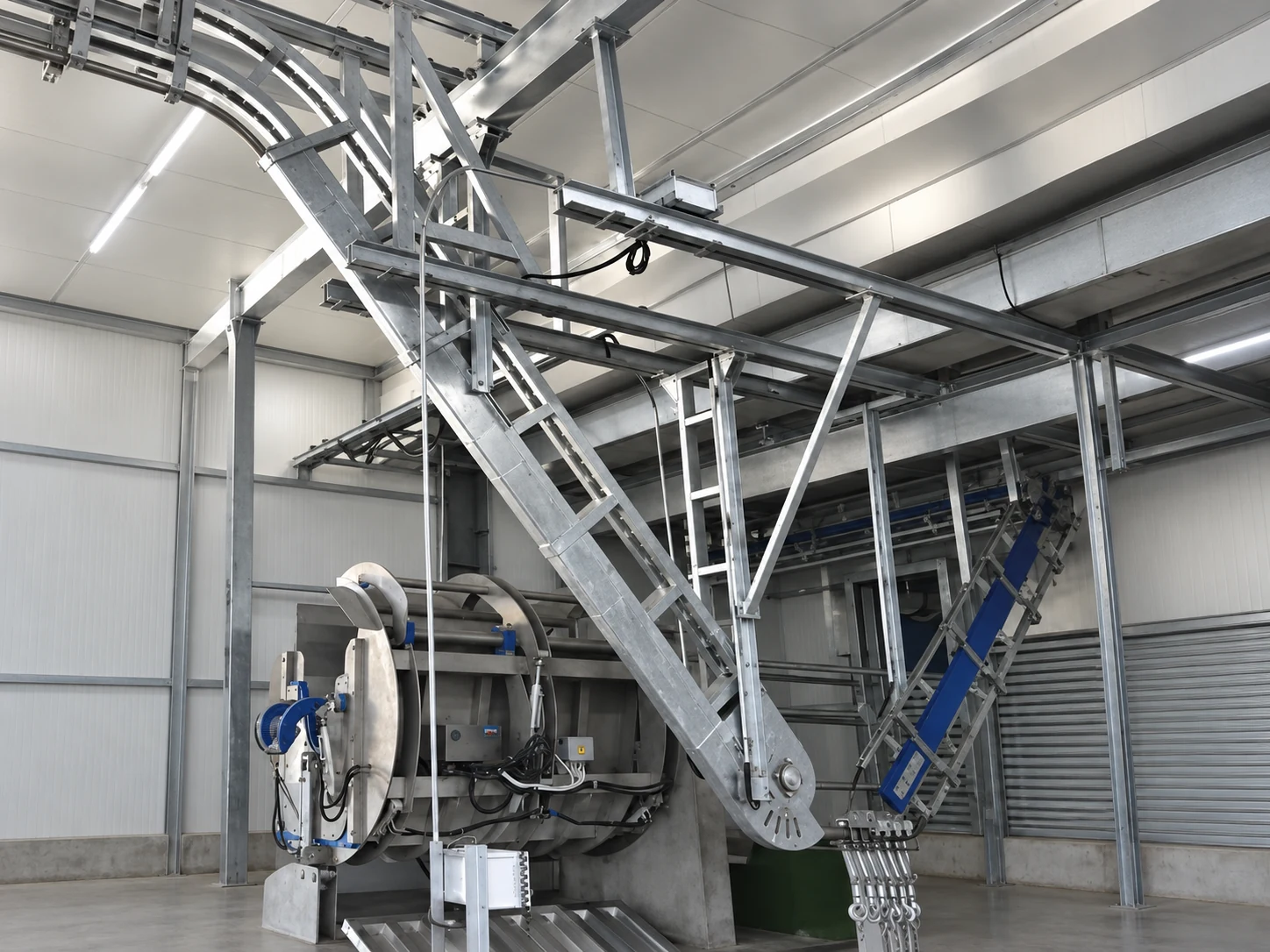
Station 02
Cattle hoisting
The hoist takes the hanging load from the front-end work area into overhead transport. Its receiving position and lift path must meet the bleeding rail at the agreed elevation.
- Equipment
- Tubular-rail cattle hoist · Hanging-chain and rail interface
- Factory planning check
- Provide measured floor levels, structural support information and the proposed hanging-chain/rail arrangement. Confirm who supplies the supporting steelwork and access protection.
Incoming: Restraint & slaughter configuration
Outgoing: Bleeding & overhead conveying
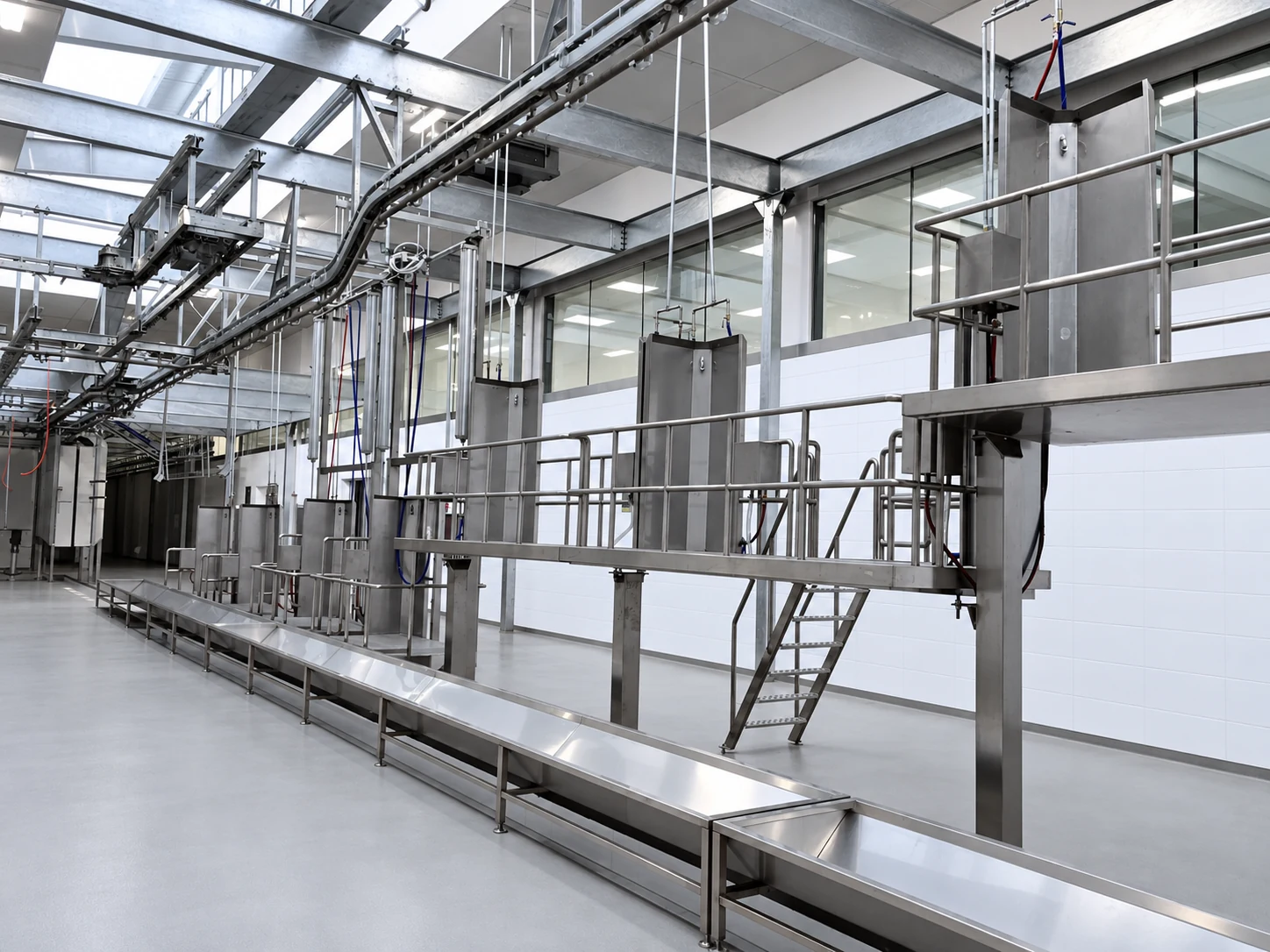
Station 03
Bleeding & overhead conveying
Combine suspended movement, the bleeding work position and blood collection in one section plan. Establish the downstream release point from the agreed operating procedure.
- Equipment
- Suspended bleeding conveyor · Tubular-rail bleeding chains
- Factory planning check
- Confirm the selected bleeding arrangement, rail route, collection outlet and cleaning access. Electrical stimulation is an optional design discussion; this image does not show a dedicated unit.
Incoming: Cattle hoisting
Outgoing: Rehanging & pre-skinning
Change rail and remove the hide
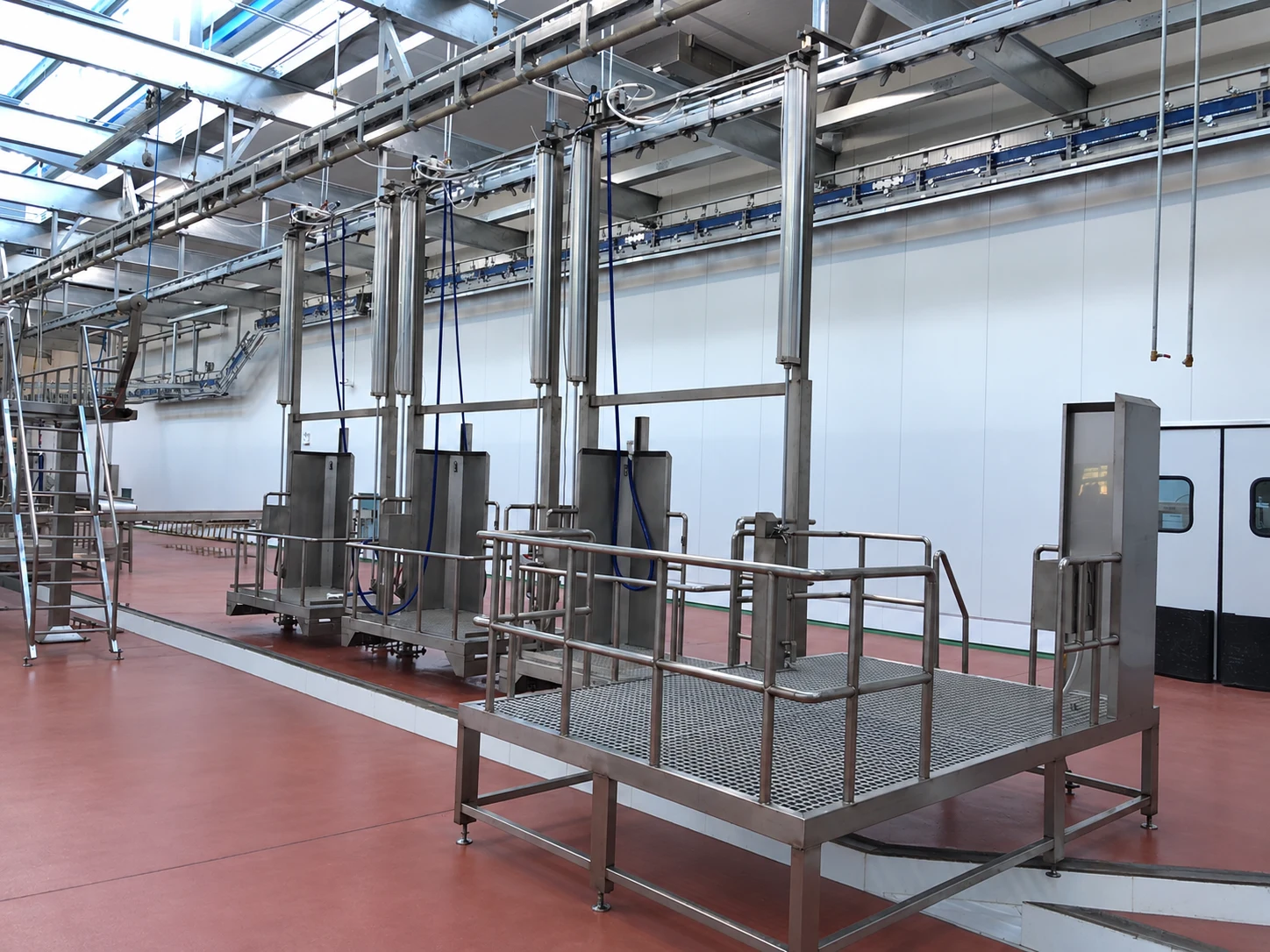
Station 04
Rehanging & pre-skinning
Rehanging changes the carcass support and prepares the working orientation for hide removal. Manual pre-skinning positions need access around the rail without blocking the transfer.
- Equipment
- Pneumatic rail-changing device · Rehanging platform · Dressing work platforms · Stepwise carcass conveyor
- Factory planning check
- Measure existing or proposed rail elevations and the usable space around each platform. Define the handoff to the hide puller and the route of pre-skinning tools and removed material.
Incoming: Bleeding & overhead conveying
Outgoing: Mechanical hide pulling
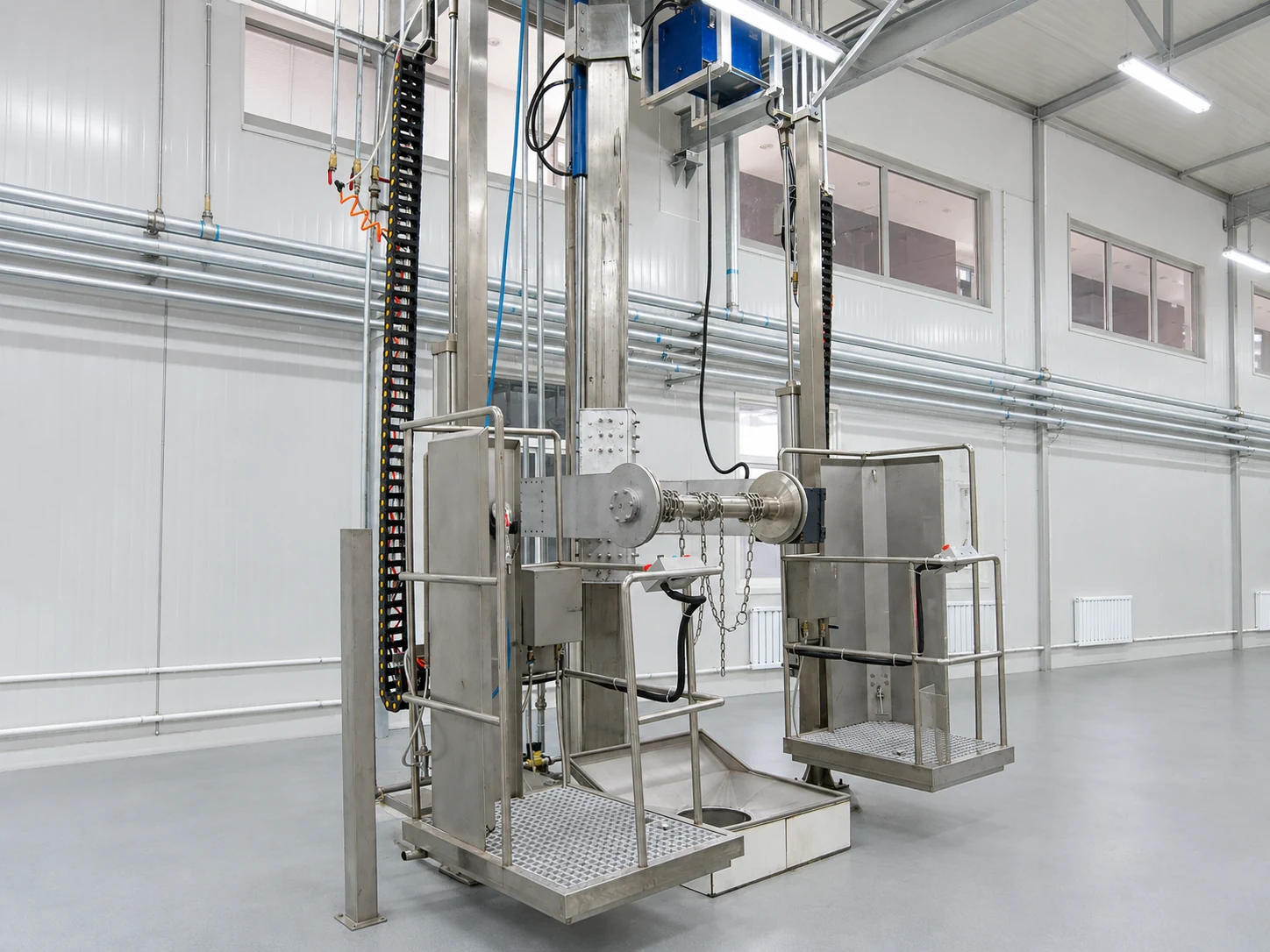
Station 05
Mechanical hide pulling
Mechanical pulling follows the manual preparation of the hide. Connect the puller, adjacent lifting platforms and carcass support so the removed hide has a defined outlet.
- Equipment
- Hydraulic hide puller · Pneumatic lifting platforms · Hide-handling interface
- Factory planning check
- Specify the animal range, puller orientation, operator travel and hide reception. Resolve support loads, services and clearance from the engineering drawing rather than the photograph.
Incoming: Rehanging & pre-skinning
Outgoing: Head removal & evisceration
Connect carcass and offal inspection
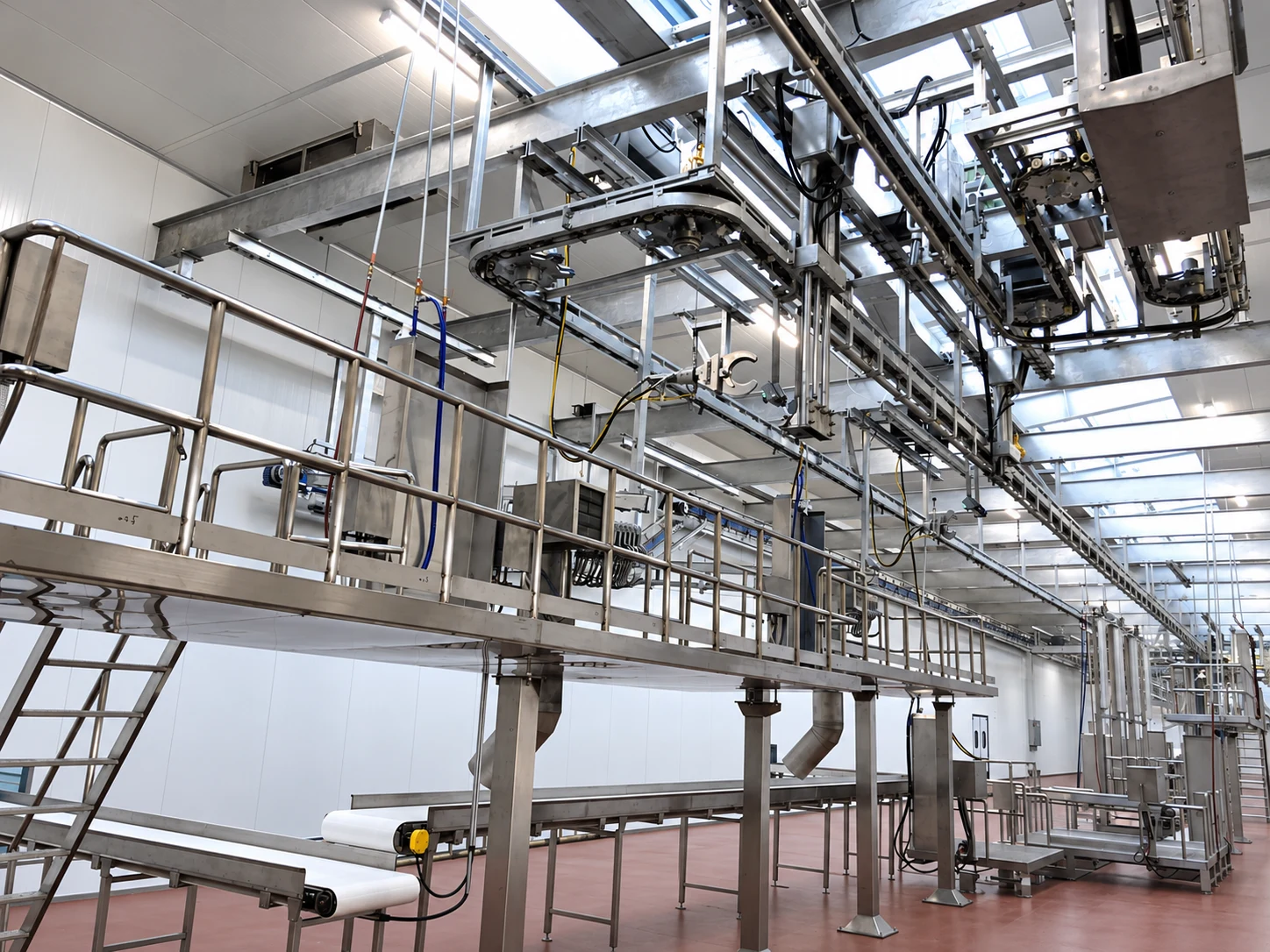
Station 06
Head removal & evisceration
Provide separate access for head removal and manual evisceration beside the dressing conveyor. The head and offal outlets must remain connected to the inspection and identification plan.
- Equipment
- Head-removal and evisceration workstations · Pneumatic lifting platform · Carcass dressing conveyor · White-offal tipping-bucket interface
- Factory planning check
- Show working platforms, material reception points and the intended carcass/offal association. Ask the veterinary team to review the presentation and any holding or rejection route.
Incoming: Mechanical hide pulling
Outgoing: Offal transfer & synchronized inspection
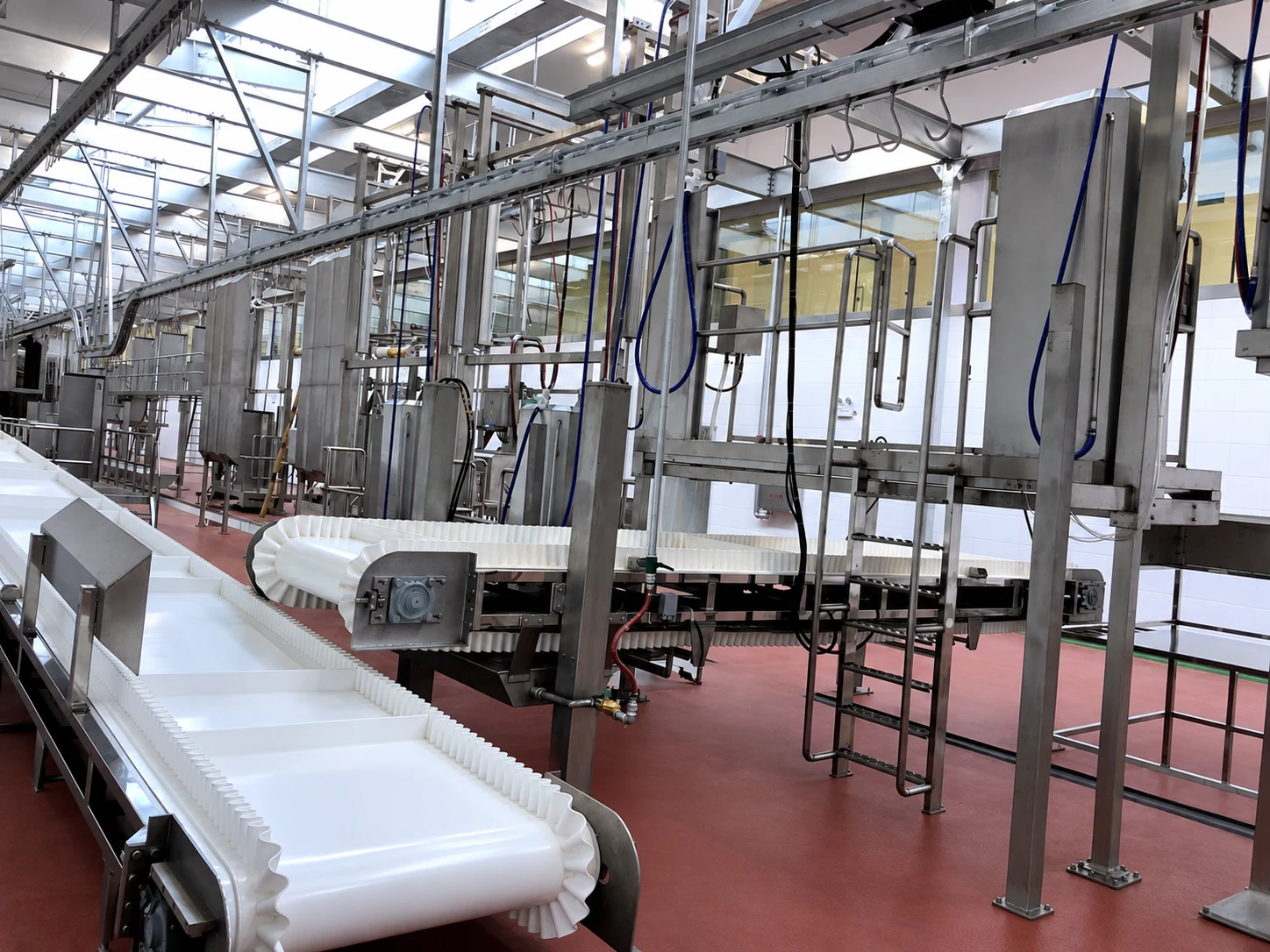
Station 07
Offal transfer & synchronized inspection
Offal moves on a parallel route for inspection while the carcass remains identifiable. White-offal reception and suspended red-offal transfer are different interfaces to select and coordinate.
- Equipment
- Floor-level white-offal inspection conveyor · Suspended red-offal inspection conveyor
- Factory planning check
- Confirm inspection positions, tray/bucket or hanging presentation, identification and material outlets with the local veterinarian. The photograph illustrates the white-offal conveyor only.
Incoming: Head removal & evisceration
Outgoing: Carcass splitting
Split, finish and wash
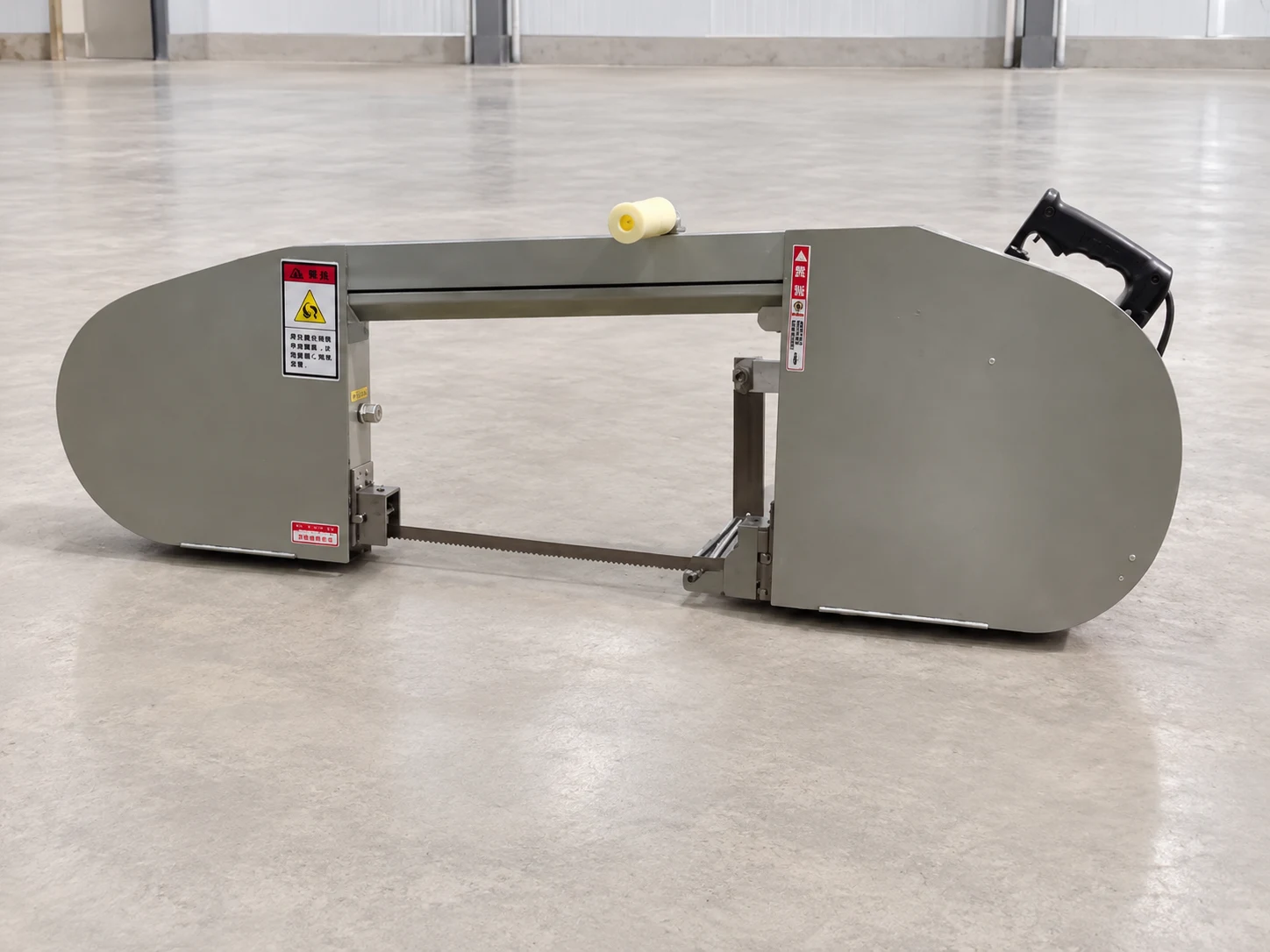
Station 08
Carcass splitting
The splitting station combines the band saw, operator working height and suspended carcass position. The tool and its support must fit the rail movement and sanitation arrangement.
- Equipment
- Band splitting saw · Balancer and tool-sanitation interface · Pneumatic lifting platform
- Factory planning check
- Record the carcass range, platform travel, saw support, utility supply and cleaning access. Coordinate the working position with upstream dressing and downstream inspection.
Incoming: Offal transfer & synchronized inspection
Outgoing: Inspection, trimming & weighing interfaces
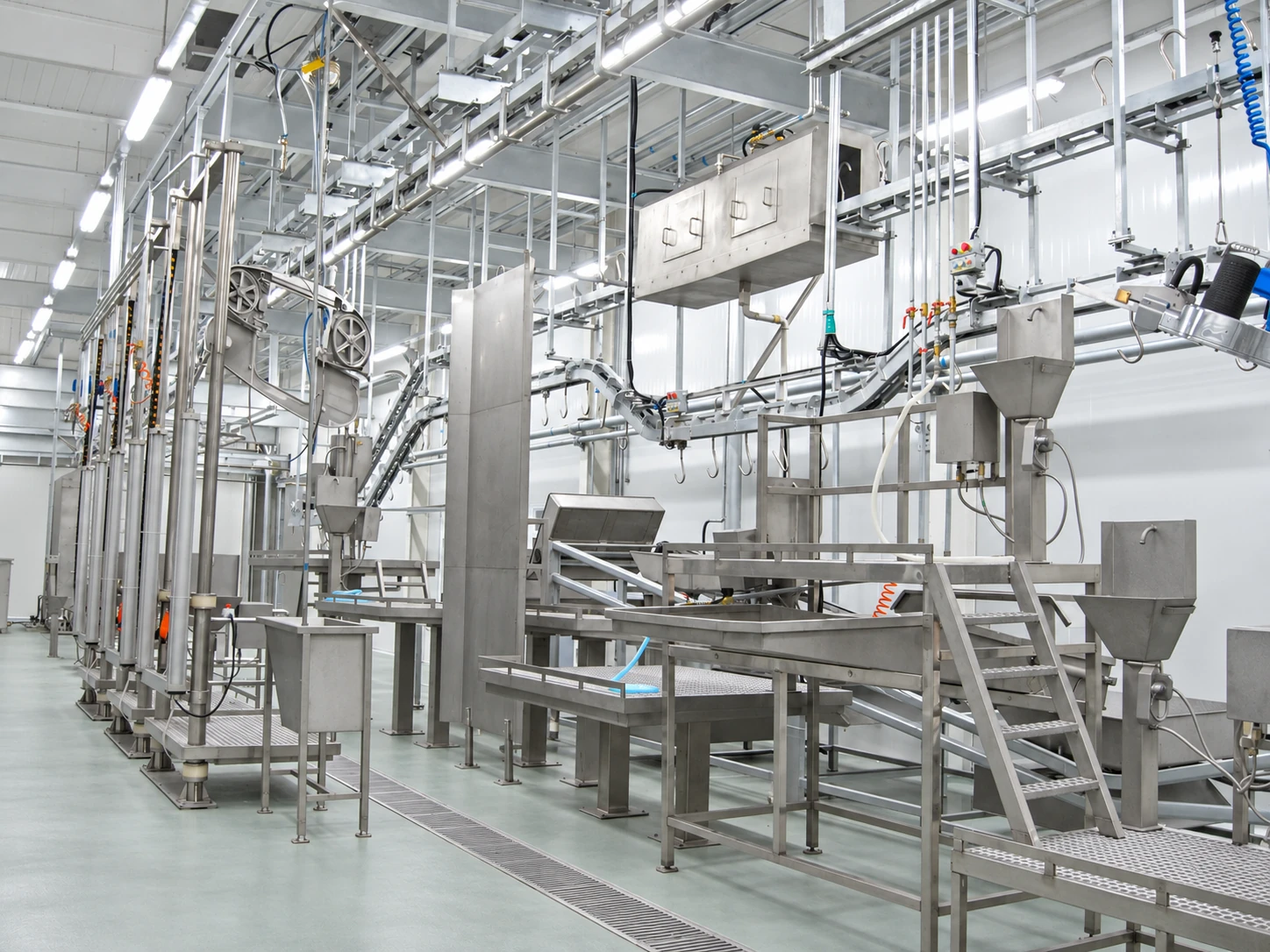
Station 09
Inspection, trimming & weighing interfaces
Reserve working positions for carcass inspection and trimming before the next transfer. Locate the weighing interface where the approved product and record flow require it.
- Equipment
- Carcass inspection and trimming workstations · Work platforms and rail conveyor · Weighing interface
- Factory planning check
- Define the veterinary decision, temporary holding/rejection route, trim collection and weighing-data requirement. The platform image does not prove that a scale or grading system is included.
Incoming: Carcass splitting
Outgoing: Carcass washing
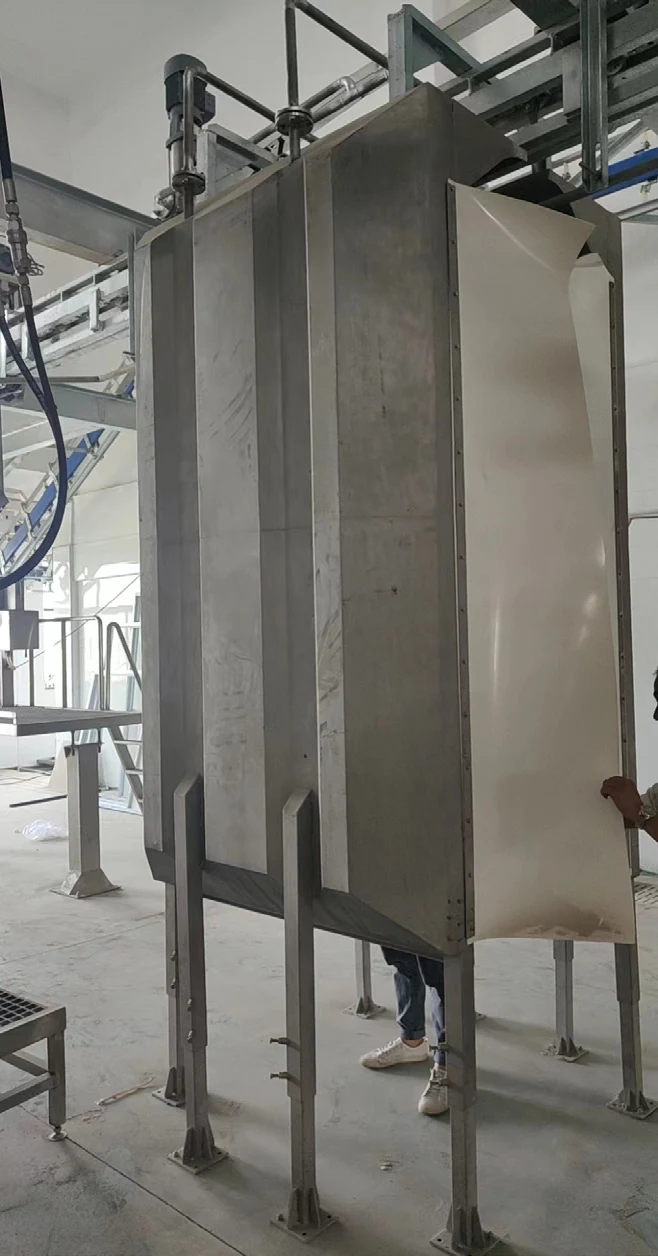
Station 10
Carcass washing
The washing cabinet receives the carcass from the finishing rail and returns it to the transport route. Coordinate the enclosure and spray service with the room drainage.
- Equipment
- Automatic carcass washing machine · Spray and overhead-conveyor interface
- Factory planning check
- Confirm cabinet clearance, carcass envelope, water connections, discharge route and cleaning access. Water-use and treatment sizing need supplier and site-engineer information.
Incoming: Inspection, trimming & weighing interfaces
Outgoing: Chilling & maturation interface
Hand over to the cold-chain and cutting rooms
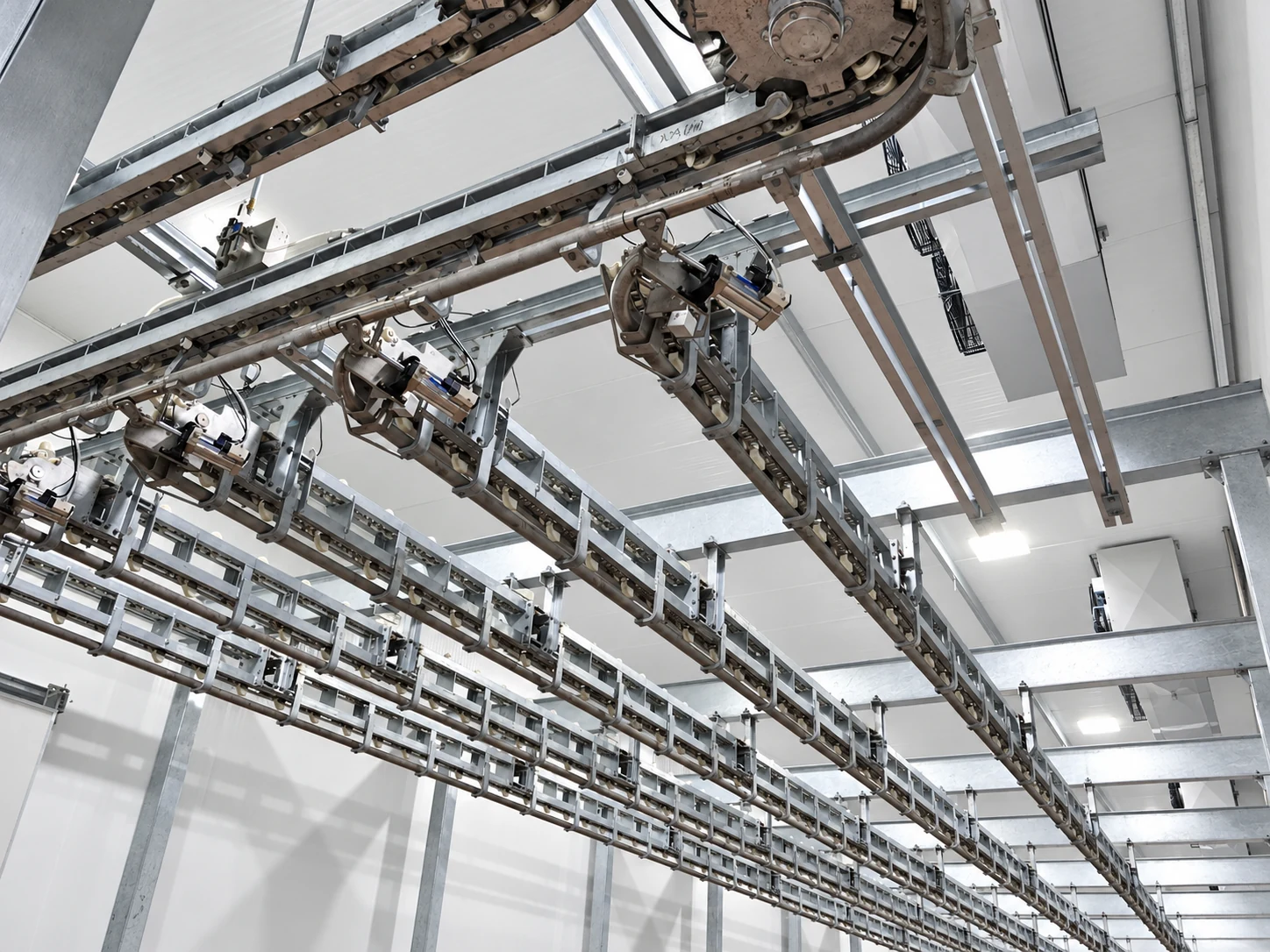
Station 11
Chilling & maturation interface
The rail hands the dressed carcass over to the chilling arrangement. Cold-room entry, switches and subsequent dispatch or cutting transfer form one transport boundary.
- Equipment
- Rapid precooling conveyor · Chilled-room rail transport · Pneumatic rail-changing interface
- Factory planning check
- Give the rail and refrigeration teams the same room plan, product route and operating brief. A conveyor image establishes transport equipment, not refrigeration capacity or cooling performance.
Incoming: Carcass washing
Outgoing: Quartering, deboning & cutting interfaces
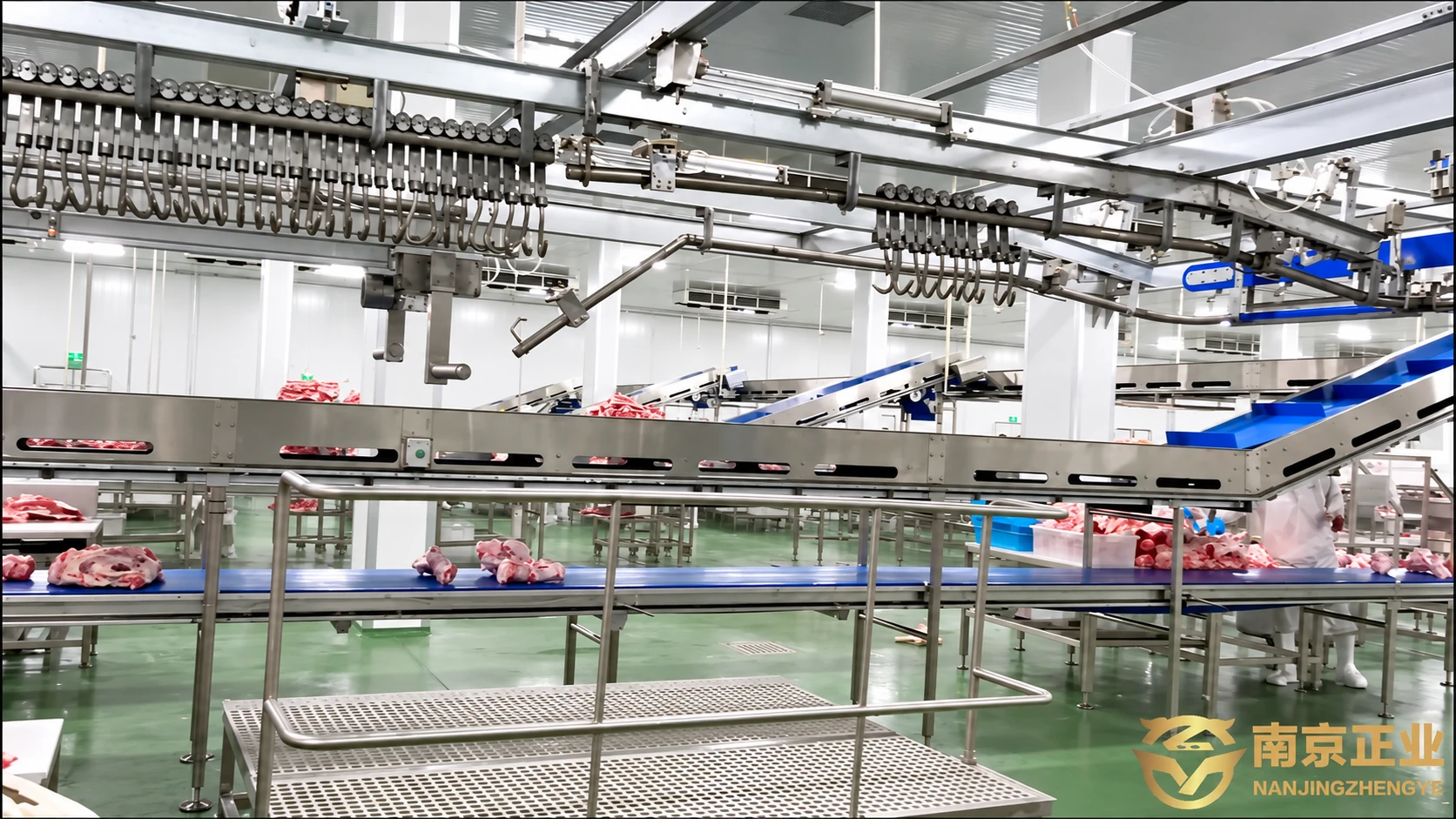
Station 12
Quartering, deboning & cutting interfaces
After chilling, the product route may lead to carcass dispatch or to quartering, manual deboning and cutting. Define each handoff and the scope of the downstream conveyors.
- Equipment
- Quarter-carcass lowering/hoisting interface · Manual deboning rail · Meat cutting conveyor
- Factory planning check
- State the intended sale products, cutting-room layout and loading route. The video-derived image shows transfer/cutting conveyors; quartering and deboning equipment must be specified for the project.
Incoming: Chilling & maturation interface
Outgoing: Product dispatch or the specified further-processing scope
Turn the route into a supplier and building brief
Put rail elevations, platform positions, material outlets and service boundaries on a dimensioned layout. Identify which items the machinery package includes and which the building, veterinary, refrigeration and wastewater specialists must resolve. The photographed sequence does not establish a particular plant capacity or a certification result.
Plan the layout · Prepare a cattle line brief · Discuss the interfaces