Use this cattle slaughterhouse equipment catalog to identify the machine or working interface at each line section. Select the slaughter route first, then provide the animal, rail, building and service information needed for a project-specific equipment proposal.
Specify the handoff as well as the machine
A cattle restraint box, hide puller or splitting saw works within a larger handling route. Ask the proposal to identify the preceding station, receiving rail or material outlet, operator access and buyer-supplied services. The photographs below show equipment presentations; they do not establish delivered capacity or an included weighing, refrigeration or certification package.
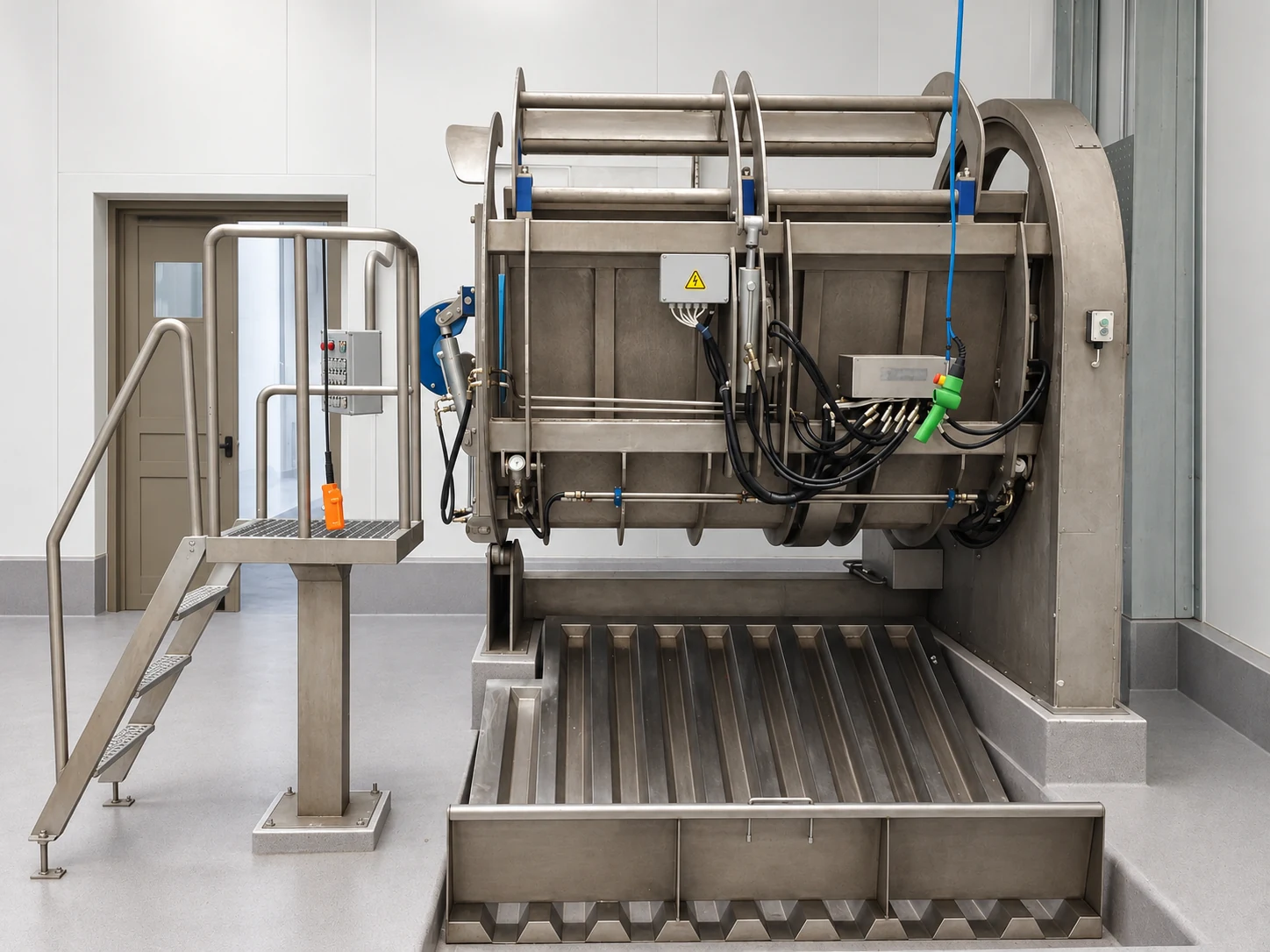
Rotary cattle restraint box
Position cattle for the selected front-end procedure.
Selection information: Identify the cattle size range, entry approach, operator access and the procedure approved for this route. Keep restraint geometry and the method decision on the same brief.
Locate this station in the complete cattle process · Read the equipment detail
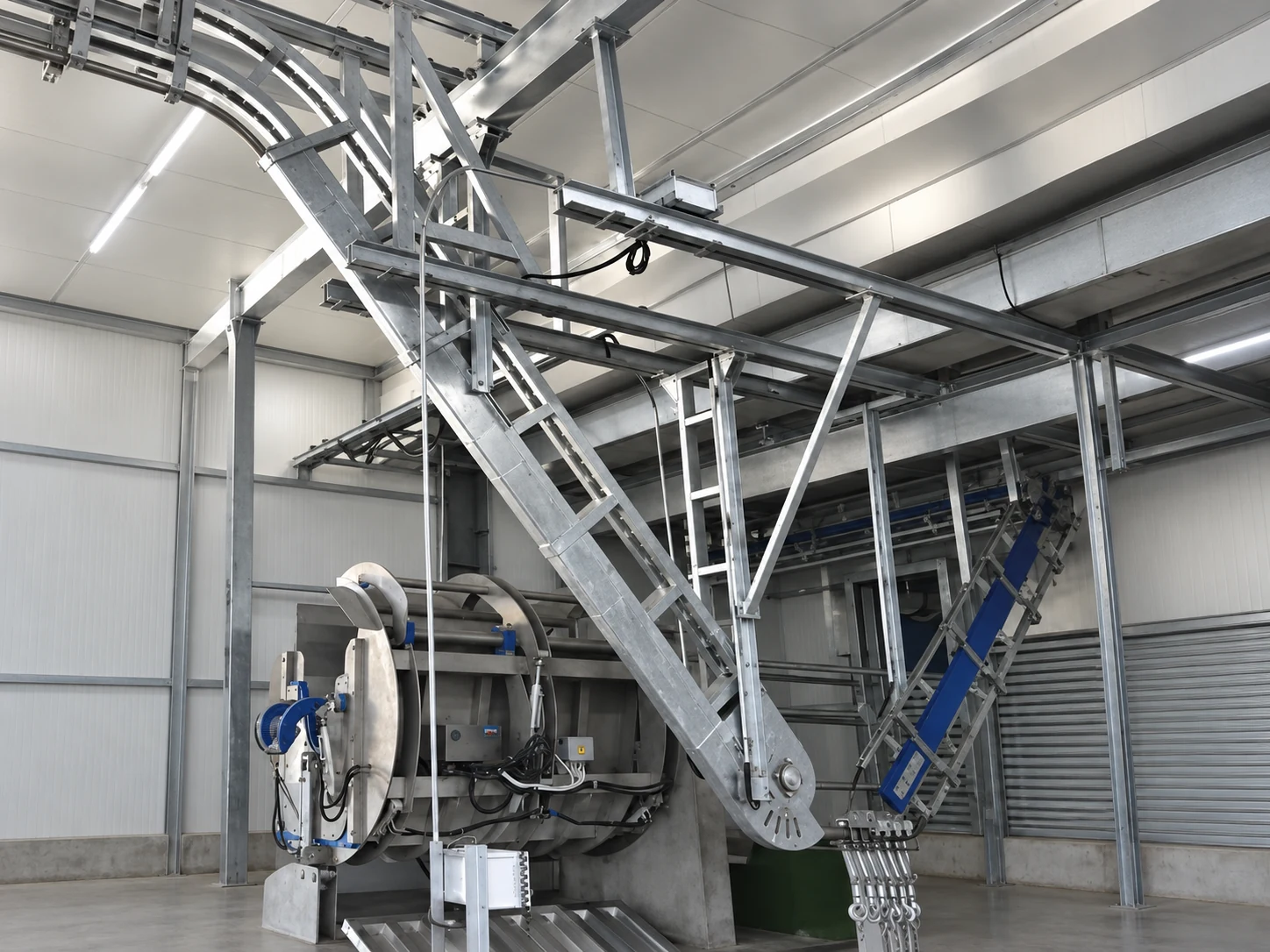
Tubular-rail cattle hoist
Lift the hanging load onto the bleeding transport route.
Selection information: Provide measured floor levels, structural support information and the proposed hanging-chain/rail arrangement. Confirm who supplies the supporting steelwork and access protection.
Locate this station in the complete cattle process · Read the equipment detail
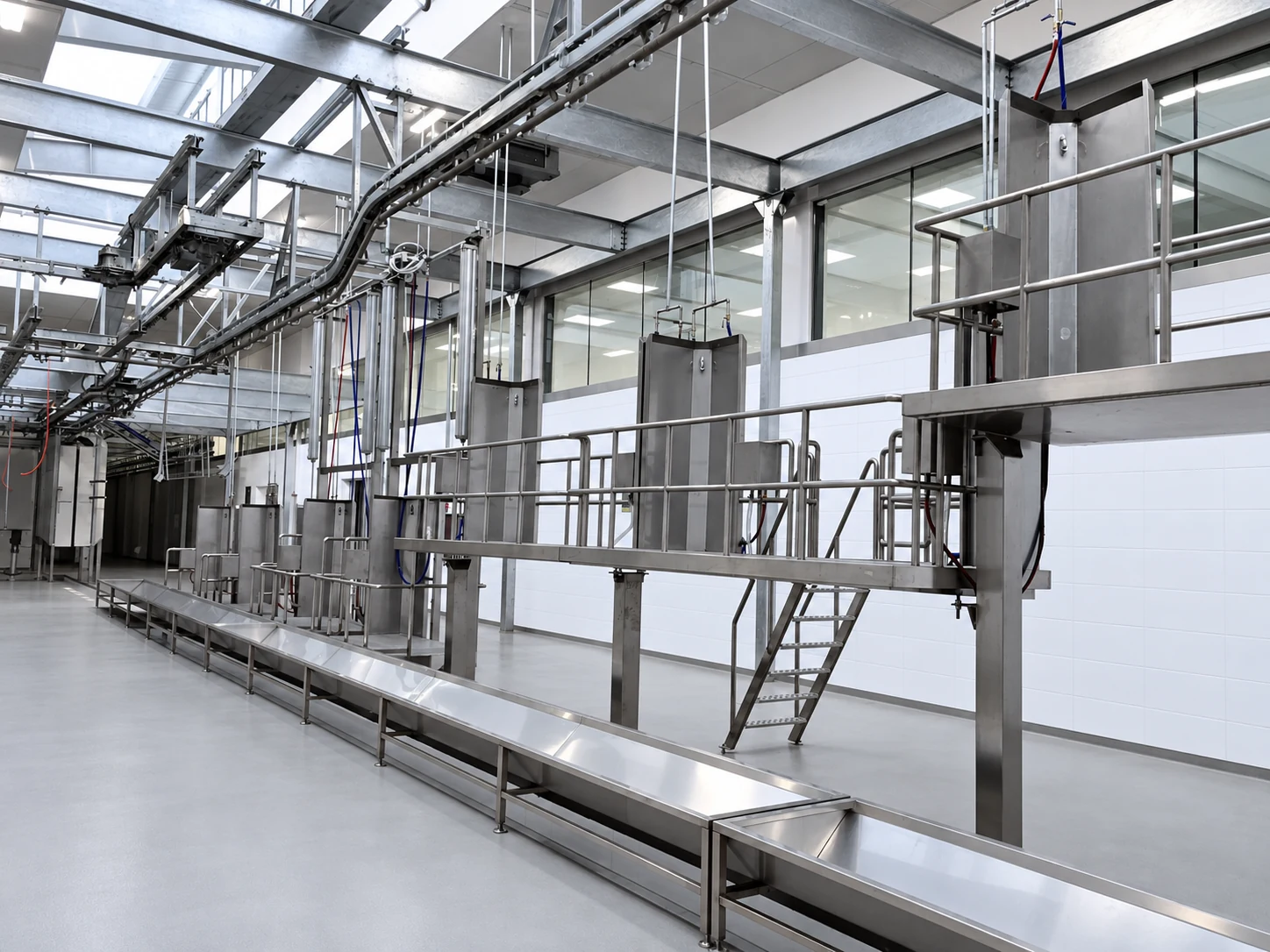
Suspended bleeding conveyor
Provide suspended bleeding movement and a blood-collection interface.
Selection information: Confirm the selected bleeding arrangement, rail route, collection outlet and cleaning access. Electrical stimulation is an optional design discussion; this image does not show a dedicated unit.
Locate this station in the complete cattle process · Read the equipment detail
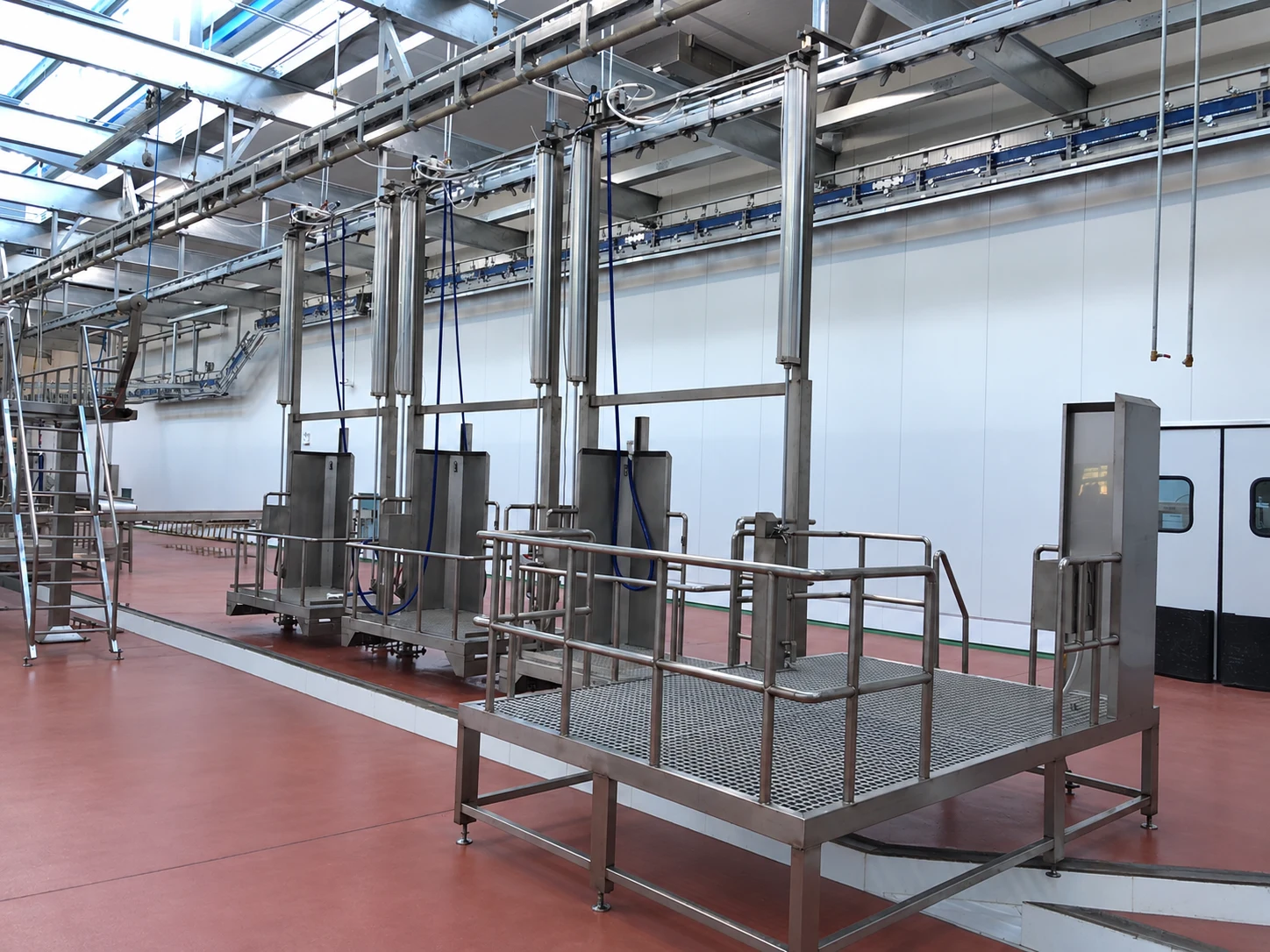
Pneumatic rail-changing device
Change carcass support and provide manual pre-skinning access.
Selection information: Measure existing or proposed rail elevations and the usable space around each platform. Define the handoff to the hide puller and the route of pre-skinning tools and removed material.
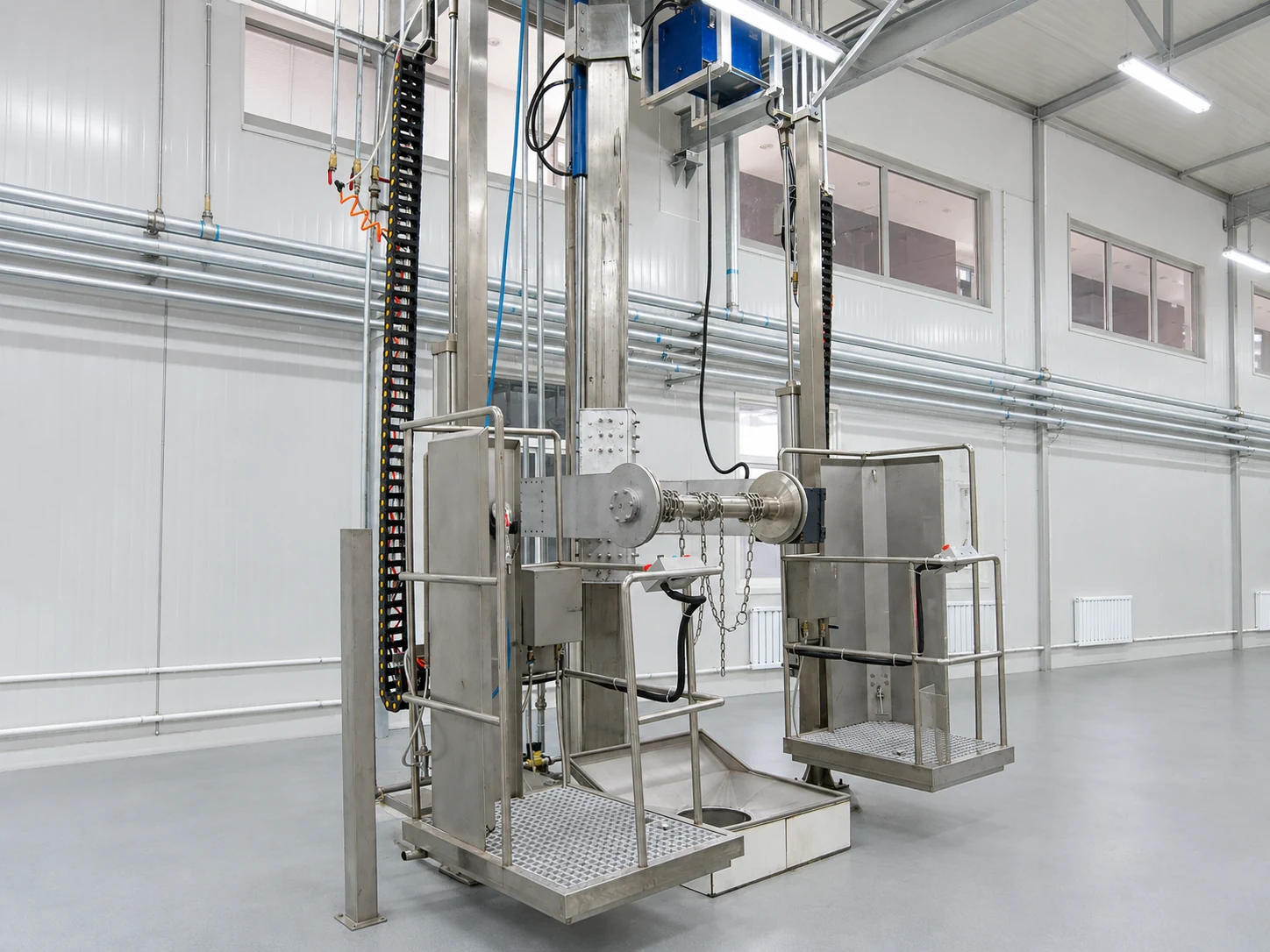
Hydraulic hide puller
Pull the prepared hide with coordinated working platforms.
Selection information: Specify the animal range, puller orientation, operator travel and hide reception. Resolve support loads, services and clearance from the engineering drawing rather than the photograph.
Locate this station in the complete cattle process · Read the equipment detail
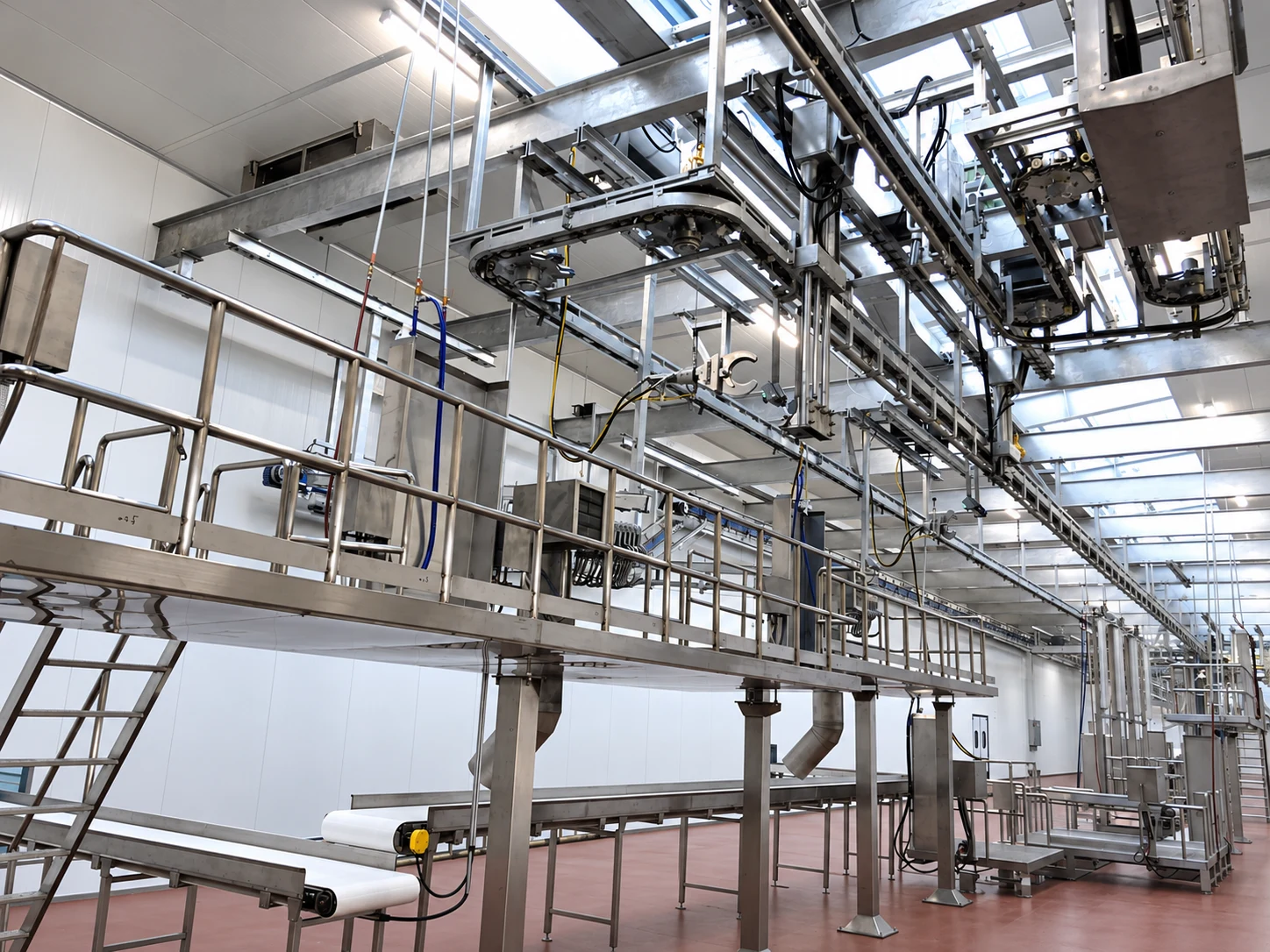
Head-removal and evisceration workstations
Support manual head removal and evisceration beside the dressing conveyor.
Selection information: Show working platforms, material reception points and the intended carcass/offal association. Ask the veterinary team to review the presentation and any holding or rejection route.
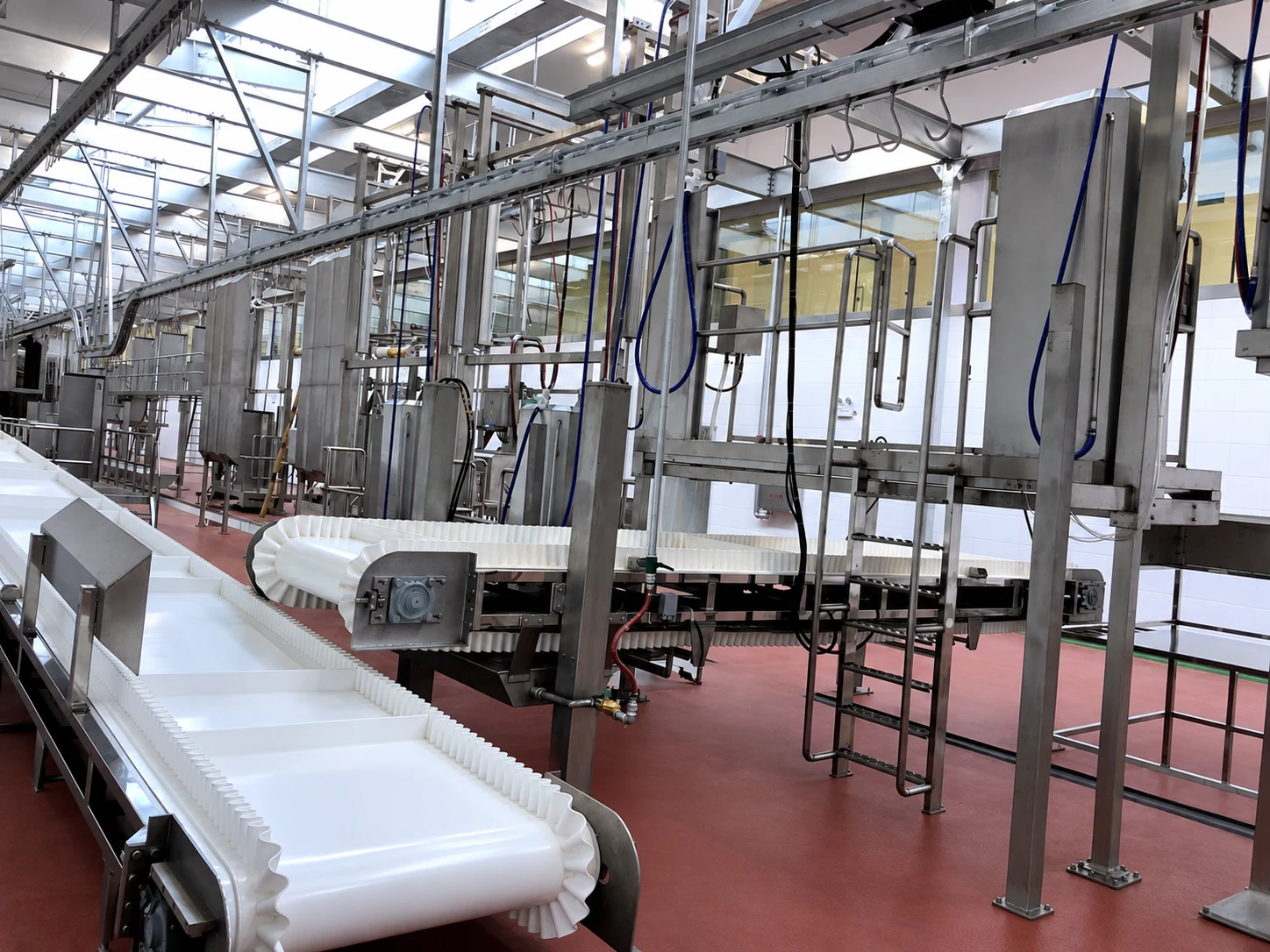
Floor-level white-offal inspection conveyor
Present offal on a coordinated inspection route.
Selection information: Confirm inspection positions, tray/bucket or hanging presentation, identification and material outlets with the local veterinarian. The photograph illustrates the white-offal conveyor only.
Locate this station in the complete cattle process · Read the equipment detail
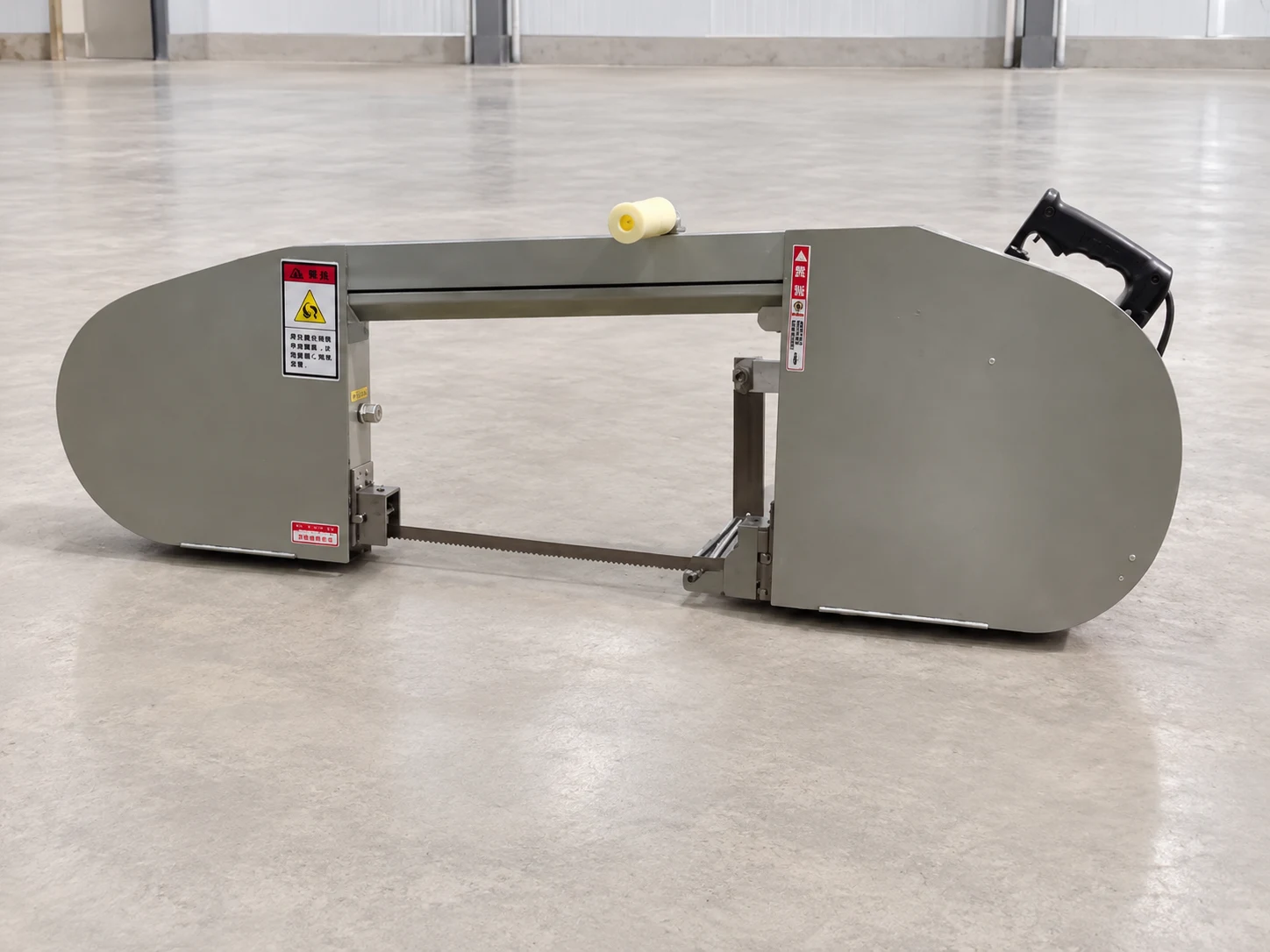
Band splitting saw
Provide the band-saw and platform interface for carcass splitting.
Selection information: Record the carcass range, platform travel, saw support, utility supply and cleaning access. Coordinate the working position with upstream dressing and downstream inspection.
Locate this station in the complete cattle process · Read the equipment detail
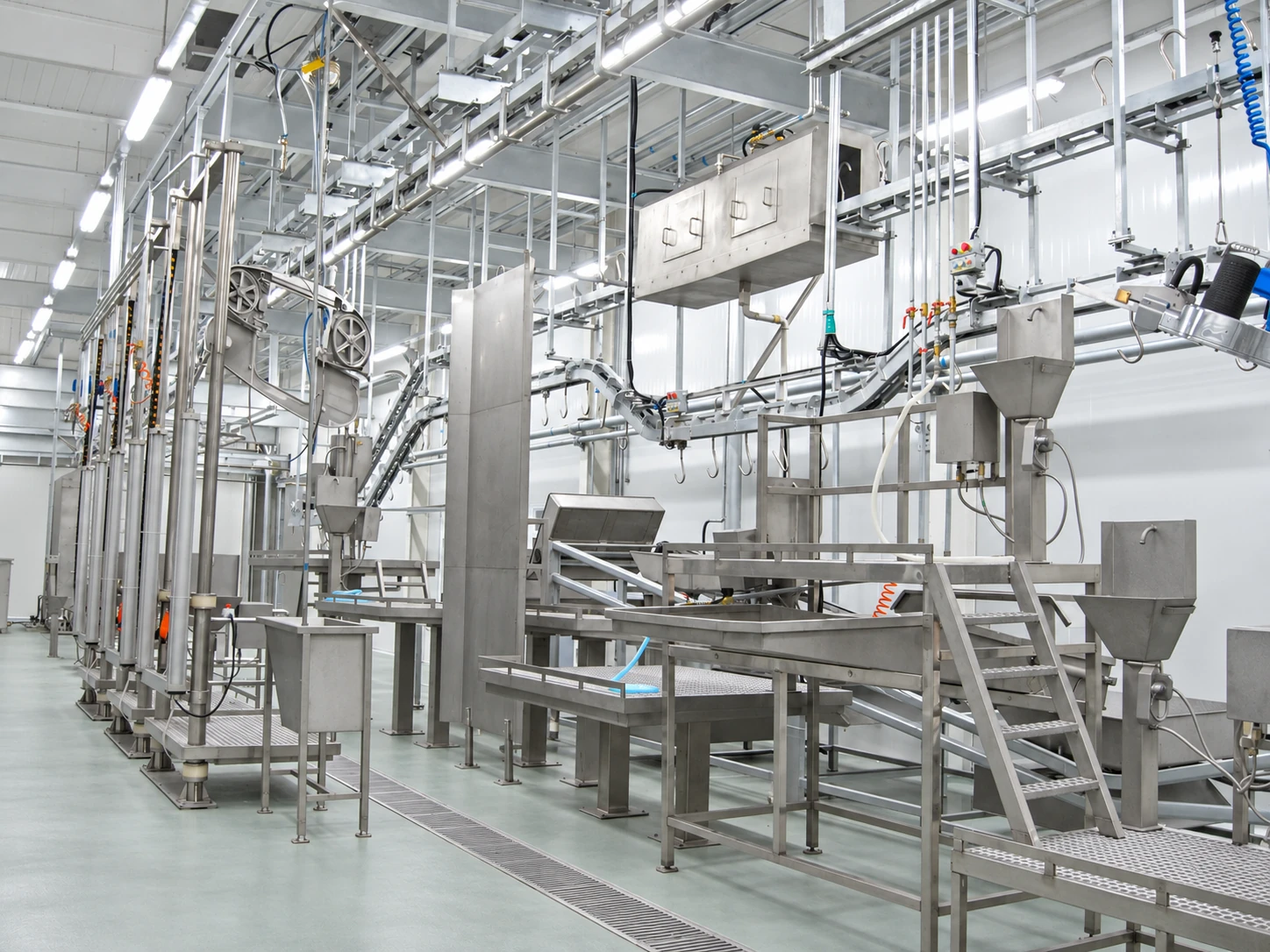
Carcass inspection and trimming workstations
Provide inspection/trimming work positions and a separately specified weighing interface.
Selection information: Define the veterinary decision, temporary holding/rejection route, trim collection and weighing-data requirement. The platform image does not prove that a scale or grading system is included.
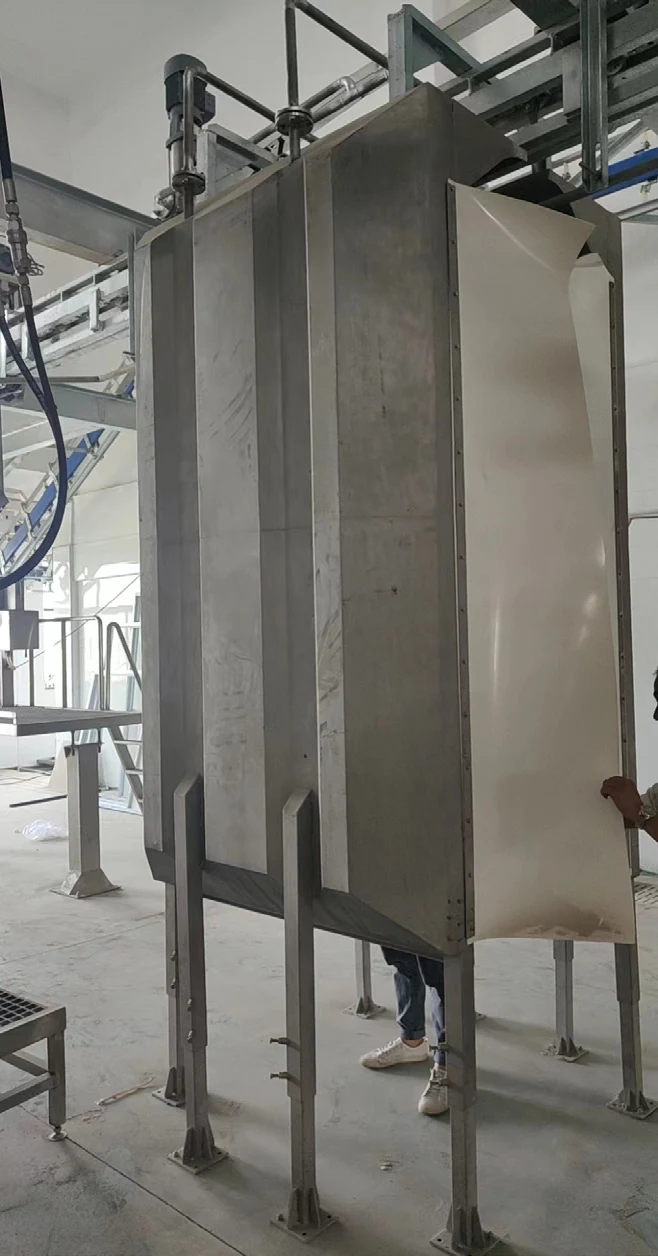
Automatic carcass washing machine
Connect the carcass spray-washing cabinet to overhead transport.
Selection information: Confirm cabinet clearance, carcass envelope, water connections, discharge route and cleaning access. Water-use and treatment sizing need supplier and site-engineer information.
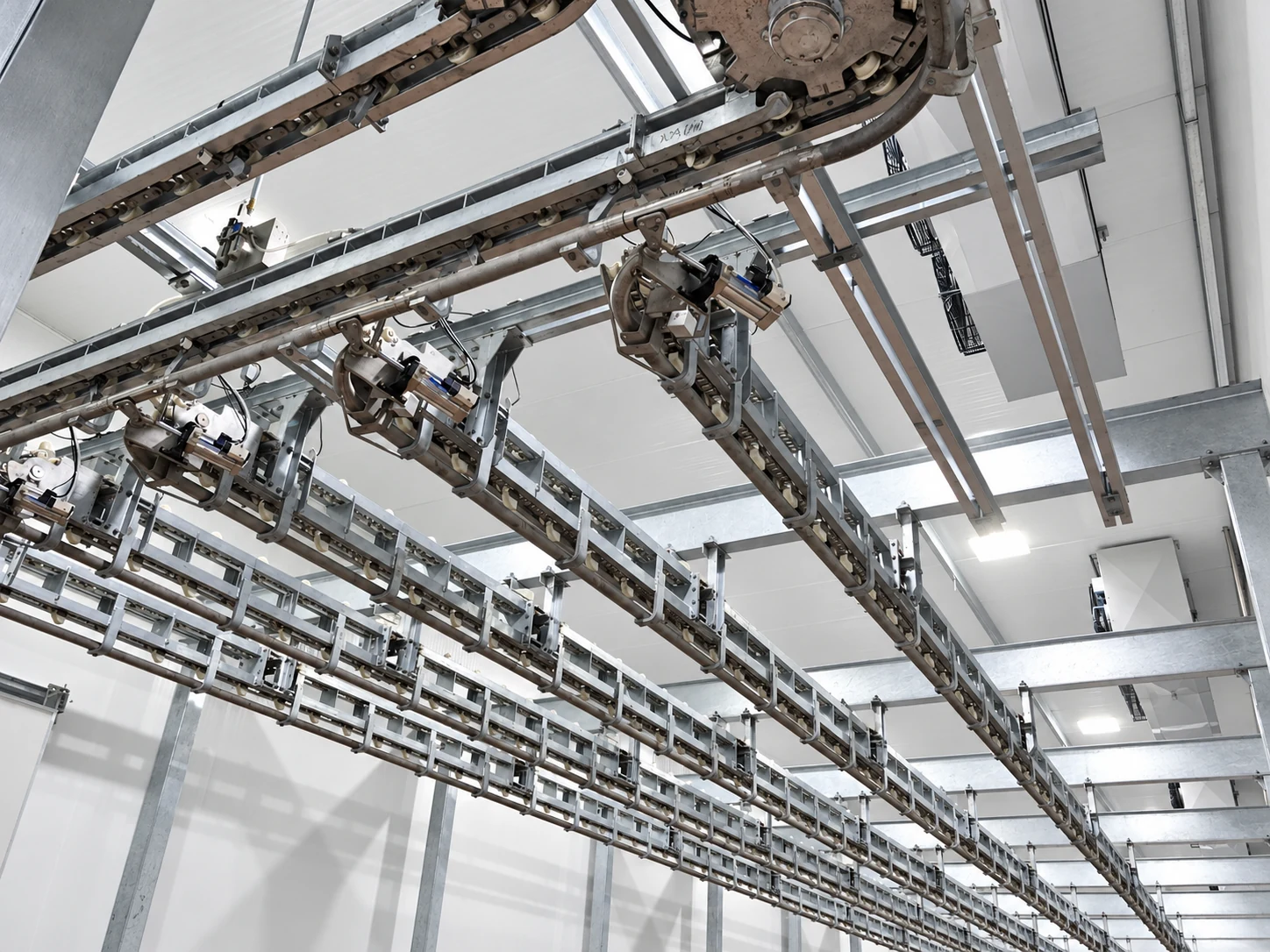
Rapid precooling conveyor
Transfer carcasses through the agreed cold-room rail arrangement.
Selection information: Give the rail and refrigeration teams the same room plan, product route and operating brief. A conveyor image establishes transport equipment, not refrigeration capacity or cooling performance.
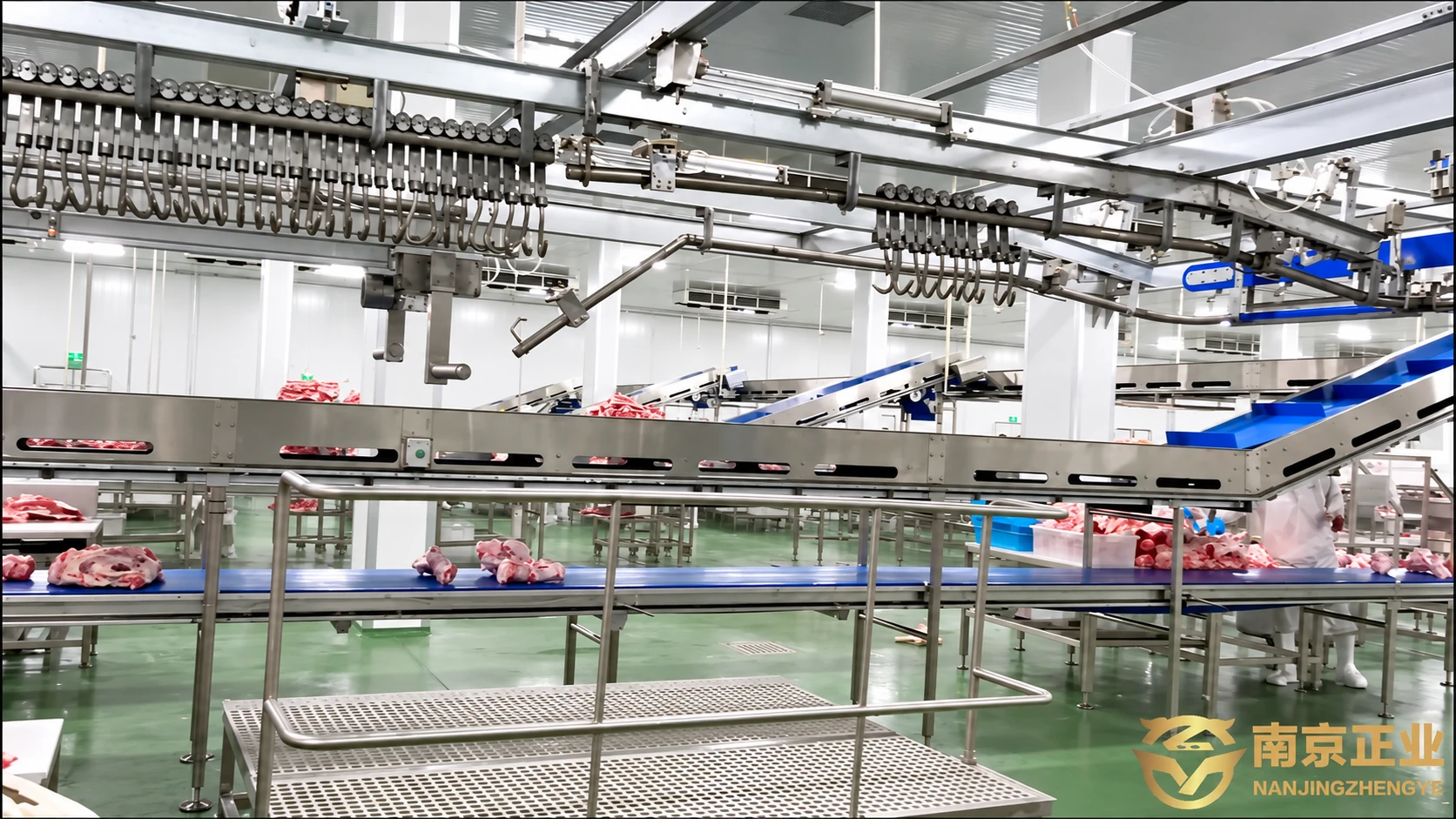
Quarter-carcass lowering/hoisting interface
Connect quarter-carcass transfer and the specified cutting-room conveyors.
Selection information: State the intended sale products, cutting-room layout and loading route. The video-derived image shows transfer/cutting conveyors; quartering and deboning equipment must be specified for the project.